Crop Circles and Corn Maze Raves: Party or Portal?
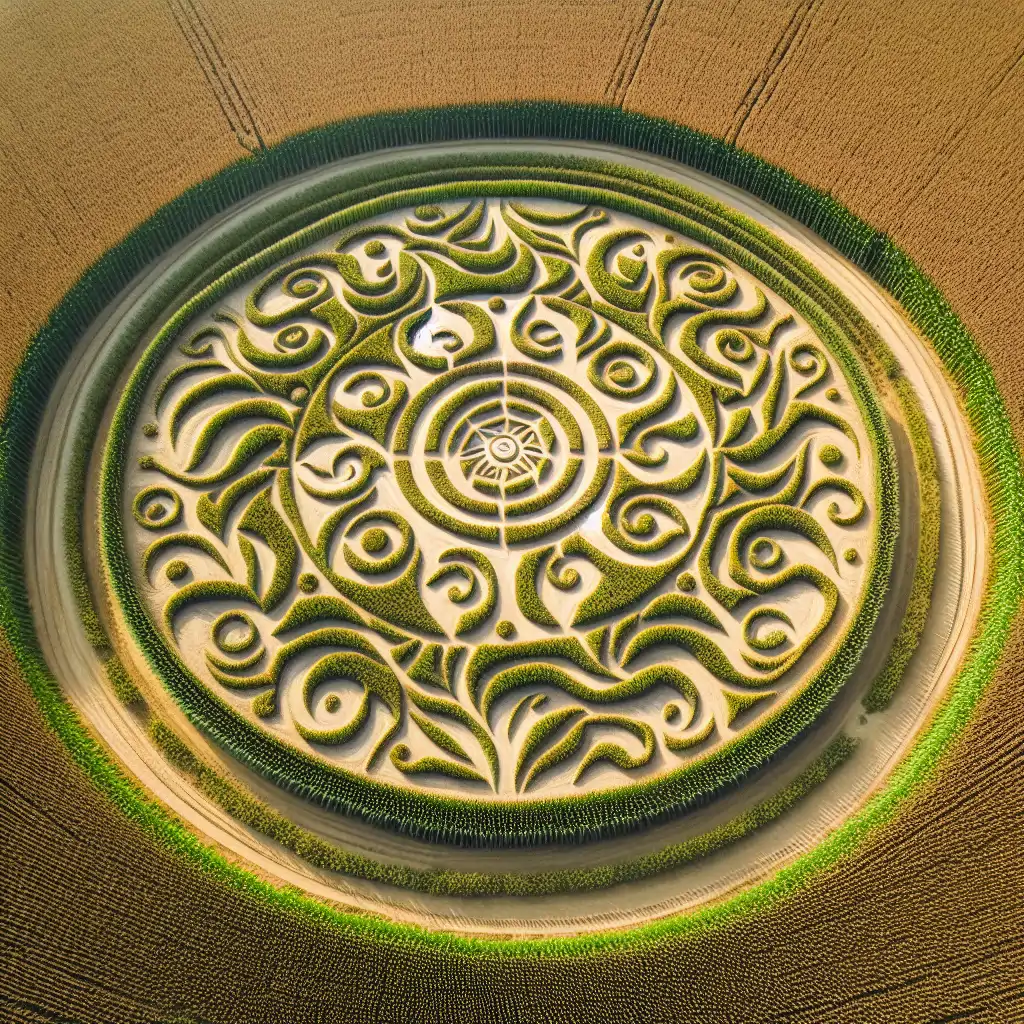
Crop circles have long bewildered scientists, farmers, and everyone in between. These intricate designs carved into fields of corn and wheat appear overnight, sparking endless debates and conspiracy theories. While many believe these formations are encrypted messages from extraterrestrial beings, others argue they are merely the handiwork of elaborate pranksters. Today, we’ll journey down a corn-stalked rabbit hole and examine an even wackier theory: what if crop circles are not secret communiqués but rather the chosen dance floors for alien fiestas? Are these mysterious patterns massive cosmic invitations, beckoning us to an interstellar disco, or just the intergalactic equivalent of drawing a hopscotch grid on the sidewalk? Join us as we unravel the humor and history behind these curious formations and consider the quirky—and utterly entertaining—possibility that crop circles are the ultimate alien party venues.
Imagine, if you will, an alien revelry where the DJ booth is a flying saucer, and the dance floor is a freshly imprinted field of wheat. This zany concept adds a delightful twist to the crop circle conundrum, suggesting that rather than alien Morse code, what we might be witnessing is evidence of extraterrestrial dance-offs. As absurd as this notion may seem, it adds a splash of humor to the frequently grim and stolid discourse on UFOs and alien visits. It’s a cosmic conundrum wrapped in a corncob of comedy, inviting us to ponder not just the potential messages hidden within these vast designs, but the quirky possibilities of their creation and purpose. By examining the evidence—and indulging in a few flights of fancy—we can explore both the history of these shapes and the imaginative theories that make them such a captivating mystery.
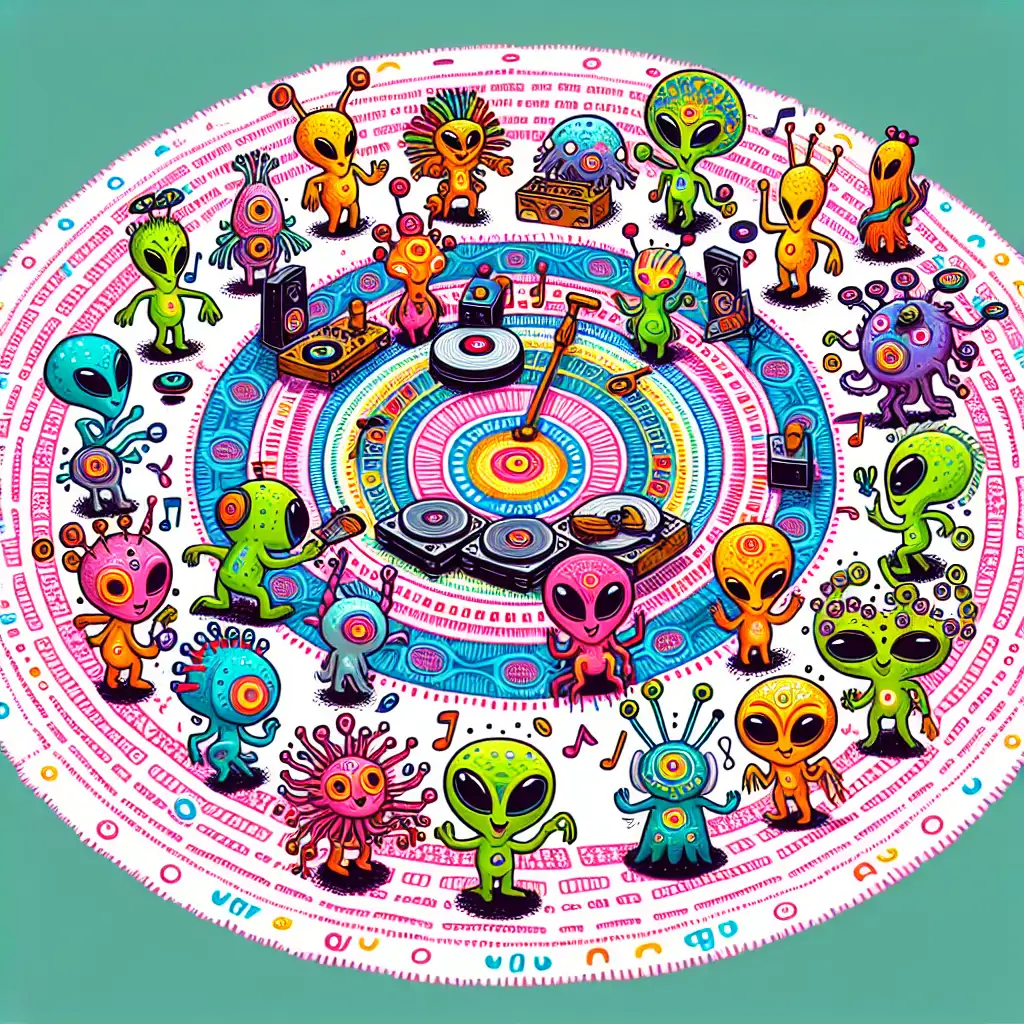
The history of crop circles is as twisted and interwoven as the stalks they’re composed of. These formations date back centuries, with some records suggesting sightings as far back as the 1600s in England. Known initially as 'fairy rings,' these formations were attributed to whimsical natural phenomena or the doings of the fair folk—the mischief-making fairies of folklore. Skip forward a few hundred years, and we find ourselves in the late 20th century, the golden age of crop circles, with increasingly elaborate and complex patterns popping up, primarily across the English countryside. While some suspected extraterrestrial artists, others claimed it was the work of artistic vandals with a penchant for geometry. But as technology advanced, these formations didn't just become more intricate; they became the talk of Earthlings fascinated by the stars.
Skeptics argue that all crop circles are human creations, pointing out that many known hoaxes have been debunked. Artists and pranksters have demonstrated how, with a fair amount of secrecy and skill, complex designs can be made overnight under the cloak of darkness using nothing more than ropes, wooden planks, and a little imagination. The infamous Doug Bower and Dave Chorley, two English pranksters, famously revealed in the early 1990s that they had created around 200 crop circles in the UK, sparking similar initiatives around the world. These revelations, however, have not deterred the true believers, who insist that the depth of the precision and complexity of some patterns transcends our earthly capabilities.
Ardent followers of the UFO hypothesis argue that crop circles could be the work of alien technology, with some suggesting they are marks left by landing spacecraft. Among these are claims of unusual electromagnetic readings at crop circle sites and changes in the cellular structure of the plants involved, leaving many to believe there's more to the mystery than pranksters run amok. Could these fields be alien landscapes, caught in the web of some cosmic dance floor, where aliens groove to the rhythm of the universe? It's an amusing but captivating thought that transforms the conversation from the mundane to the extraordinary.
But if aliens are indeed behind these occurrences, why would they transform our fields into dance floors, rather than outright messengers? Could it be that our little blue planet just happens to be the universe's Saturday night hotspot? Picture this: an alien species whose primary mode of expression and communication is through dance and artistic expression, using fields of crops as their canvas. It’s a theory that doesn’t just tickle the funny bone but opens up discussions about the culture and nature of hypothetical extraterrestrial beings. What might seem silly on the surface invites curiosity about the diversity of life forms in the universe and the potential ways they might choose to engage with us—if indeed they exist.
Exploring further, we find that crop circles may be interpreted as the playful footprint of an intergalactic party scene. After all, humans have long used intricate geometric and artistic designs to denote important social events, so why wouldn’t sophisticated alien cultures? The spirals, circles, and other complex shapes often seen could symbolize invitations, storytelling, announcements, or celestial cartography from galaxies far, far away. While not the most plausible of theories, it leaves room for speculation, creativity, and, most importantly, for humor. The idea of extraterrestrial youths rebelling with artistic graffiti of galactic proportions is as entertaining as it is poetic—the ultimate cosmic flash mob.
Bouncing back to Earth, many crop circle researchers focus on the curious scientific aspects that accompany these phenomena. Studies have shown unusual properties within crops involved in authentic circles, such as elongated nodes and expulsion cavities in the plants, which suggest exposure to intense heat or radiation—conditions purported to be outside the realm of human-made pranks. Additionally, tests have revealed peculiar magnetic anomalies and conductivity changes within these areas. Whether caused by aliens hosting a discreet dance-off or a freak environmental event, the physical changes remain a curious puzzle for researchers, tantalizing the line between science and speculation.
This inviting realm of mystery is fertile ground for the imagination, encouraging inventive narratives that blend science fiction with cultural exploration. What if crop circles serve as both a beacon and a boundary, welcoming otherworldly guests to Earth’s natural nightclubs, under the open sky? The idea of a crop circle rave plays out in our minds like a festival in a field, drawing comparisons to human traditions of music, dance, and celebration. A parallel between the unexplained phenomena of crop circles and Earthling raves begs the question: could we be part of an intergalactic festival circuit without knowing it?
While some might argue that the crop circles' repetitive patterns suggest mathematical puzzles or messages, others might see them as more reminiscent of club flyers or artistic declarations. Therein lies the beauty of crop circles—they are a canvas open to interpretations that range from solemn and scientific to utterly ridiculous and playful. It’s a field of dreams in more ways than one—drawing us to consider not just what might be behind the patterns, but creatively envisioning what they could represent in a broader cosmic tapestry. Imagine fields as interstellar graffiti spaces, luring passersby—cosmic and earthbound alike—to pause and ponder.
As we continue to unravel this delightfully puzzling narrative, we must not overlook the element of human creativity. While some circles are unarguably complex beyond human capabilities, many are the result of ground-level artistry. Field artists who construct crop circles often claim spiritual or ceremonial motivations, seeking to connect more with the environment, or wishing to convey messages about nature and harmony. Their work, intentional or not, contributes to the mythos surrounding crop circles, reinforcing the idea of these fields as canvases for celestial communication—not just to us but perhaps from us as well.
The appreciation of crop circles has even transcended atmospheric borders. Pilots and passengers worldwide have snapped thousands of images from the skies, marveling at the beauty and intricacy below. The scale of some formations truly boggles the mind, forcing the question: why and how do they appear with such precision? Could they be messages missed, celestial cartography, or church bell calls to a universe of unknowns? Our penchant for mystery keeps the questions spinning while speculation stretches beyond the fields and into the cosmos, adding an extra layer of fun to our fascination with these formations.
Peer down on Earth and imagine it as the galaxy's coolest rave: the cosmic laser lights are the stars, the bassline is a distant pulsating quasar, and crop circles are the tantalizing dance floors decorated by unseen hands—or claws. Some go so far as to muse that the formations are scripted in a language we are yet to understand, replete with galactic memes we haven’t cracked. Could we be nodded to, pointed towards, or laughed with, through these whimsical designs? It's speculative fun like this that makes the world of ufology and extraterrestrial pondering such an enticing playground for our imaginations.
As fanciful or absurd as our theories may grow, crop circles remain a profound avenue for cultural discussion and earthy speculation. Whether made by reckless pranksters, spiritual artists, or perhaps cosmic party-goers, each circle represents a scenario more creative than the last. They delight with their artistry, sparking conversations that stretch far beyond the fields, reaching into our day-to-day suspenders of disbelief. Regardless of their origin, these shapes encourage us to gather under the sky and question the known—indulging in the delightful dance of what-ifs and might-bes.
In uncovering crop circles, we brush against broader cultural phenomena that celebrate mystery and whimsy. These formations become representations of our broader search for understanding in the vastness of the universe, providing us with the chance not to just look outward but also inward—into the wonders of human creativity and the ceaseless pursuit of the unknown. Whether you lean towards believing in alien artists at play or human hoaxers at work, it doesn't alter the fact that crop circles enthrall and amuse, luring us in with their geometric allure and creative potential, leaving open the door to endless possibilities and interpretations. Come for the circles and stay for the imaginative exploits that keep us pondering.
Recognizing crop circles as a place of cultural convergence, where UFO enthusiasts, prank lovers, and seekers of mystery gather, transforms them into giant interactive stages. They invite humans to speculate, investigate, engage creatively, and, humorously enough, to sometimes even plant their theories in the ground—next to modern mysteries many have tried to solve. Regardless of whether they are objectively solved, crop circles sculpt a mental landscape full of wonder, comedy, and storytelling potential, becoming complex crossword puzzles in fields of our history.
So if you ever find yourself amid an unexpected dance of dislocated cornstalks, with the moon high above and a sense of whimsy whispering in the wind, ponder for a moment: is this just another earthbound intrigue, or perhaps an interstellar festival invitation yet to be RSVP'ed? The possibility is a delightful one, adding yet another facet to the vibrant kaleidoscope of narratives cropped up over time. We remain charmed by crop circles' enigmatic origins because they remind us of what it means to ponder the unknowable, to laugh at the ridiculous, and to dance among the questions, whether to our own beat or to those unknown—and just possibly, unearthly.
In the end, whatever stance you take concerning the origins of crop circles—whether artistic or alien—it seems they are very much like our curious fascination itself: continuously growing, enmeshed with numerous ideas, pulled taut between reality and speculation, yet ever open to interpretation. Just as these formations circle around a central truth yet to be discovered, we humans circle around theories with wide-eyed curiosity, humor, and sometimes a dance move or two of our own.
Thus, as we hover above fields strewn with creatively crafted curiosities, consider the light-hearted charm that these unexpected happenings inject into our narratives of the universe. We end our playful frolic through crop circle chaos knowing that as long as these enigmatic events appear, so too will our imaginations dance whimsically around, ensnared by cosmic parties perhaps meant just for us. So next time you venture into the heart of the countryside and find yourself amid unexpected elegance, you might just ask: are we on the brink of divine discovery or simply the next pioneers of a cosmic DJ set?
It seems only fitting to touch on the convergence between natural beauty and unexplained phenomena in crop circles. Their intricate designs mimic that of the universe itself: unpredictable, fascinating, and diverse—driving our imaginations to traverse between the lighthearted fields of theory and the heavier ones of scientific inquiry. They invite a communion between expectations and enigmas—a dance of corn stalks and intuition, rooted in Earth's earthiness yet gazing boldly at the stars. Even if they're no more than abstracts in alien expressions, they give us contact of a kind and a passport of dreams beyond, for dreamers everywhere.
Despite years of scientific analysis and sometimes comical human admissions, crop circles leave us delightedly spinning in their orbits of possibility. The allure of these designed delights spans science, spirituality, and satire, weaving critique and admiration into tales that are less about where they came from, and more about where they take us—into fields of discovery and delight that captivate an eternal audience. From Solway Firth spacemen to midnight performances of terrestrial jesters, the crop circle symphony composes notes in the stories played over campfires, conversations, and late-night musings.
In unraveling the fabric of this performance art—whether cosmic or human—it's vital to recognize the cultural ties that crop circles establish. They are dalliances from our reality, roaming the spectrum from solemn inquiry to whimsical jest. They transform fields into services of speculation and highlight the beauty of natural artistry, whether human-made or otherwise. Amid the precision and poetry of these crafted canvases, humor skips, turning possibilities into jigs and banter into songs for the next placed corn design overnight. It is a serenade to the cosmos echoed through earthly ears.
So perhaps the idea of interstellar revelries isn't as far-fetched as it initially sounds. After all, in the grand tapestry of the universe, stranger things have occurred, or at least caught our imaginations. Crop circles, whether as markers or mysteries, open space for mischief, meditation, and a multitude of merriments under the expansive sky. They are the comedic curators of a celestial conquest and vessels for storytelling that freely mix melody with mystery—a tune all too familiar to roots that run as deep as the imagination allows in the starry, baffling night.
Regardless of one’s stance on their origins—born of alien whispers, human artistry, or perhaps something we haven't defined—crop circles draw interest from diverse worlds. They remain an invitation to look upward, inward, and occasionally, with a touch of amusement, around. They are more than just circular fields; they are invitations, possibly from across the galaxy or from within us, to dance and to question, synchronizing with the cosmic pulse of a narrative cycle hoping to include us—all decked out in our own mystery-solving, dance-inviting stories in kind.
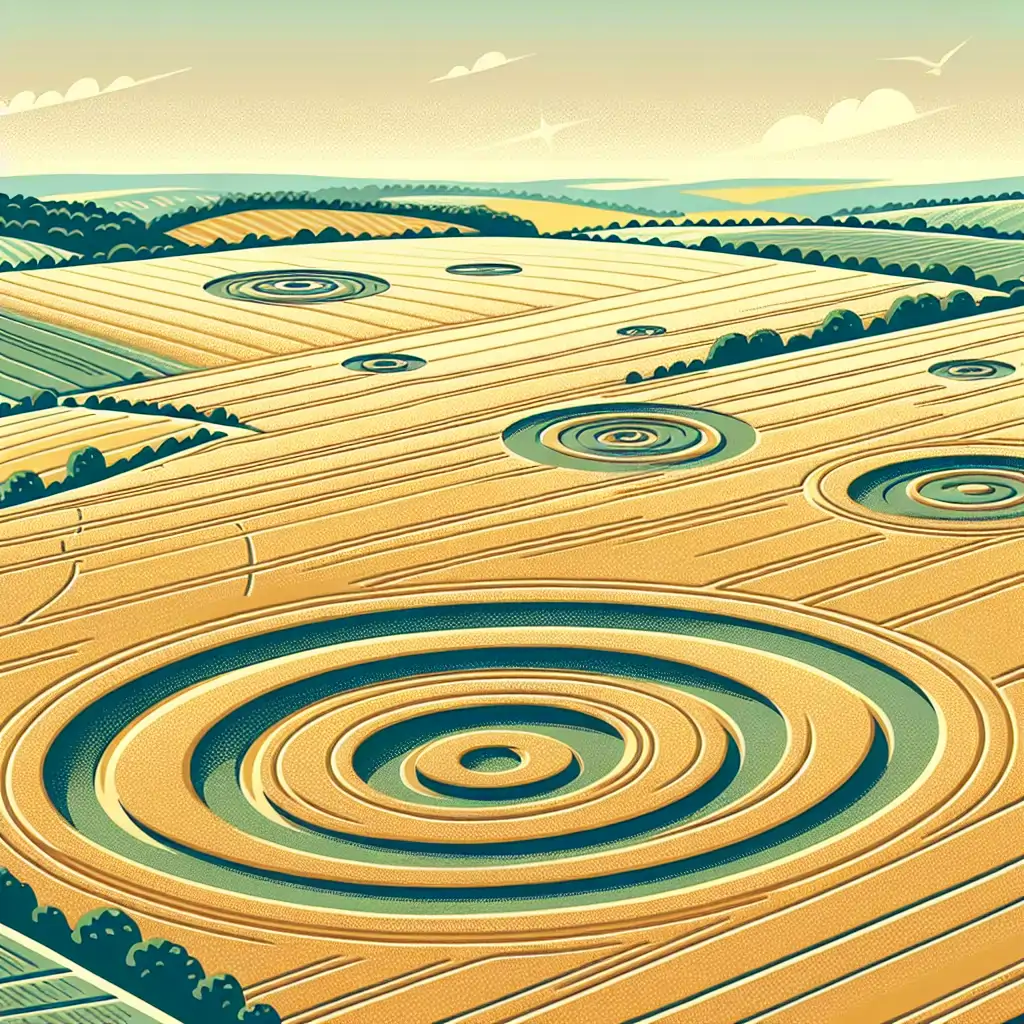
Crop circles embody a delightful enigma, blooming in fields like cosmic flowers. Whether they’re the work of cunning pranksters, spiritual artists, or indeed the handiwork of intergalactic visitors blowing off steam on Earth's green dance floors, they remind us of the joy in speculation and the richness of imagination. As mysterious as their origins are, crop circles offer a lighthearted reflection on the intersection between human creativity and celestial wonder. The intrigue they generate encourages us to explore the uncharted territories of our curiosity with a playful eye, reminding us to celebrate the inexplicable and sometimes, quite simply, to laugh.
While the science behind crop circles is as varied as their designs, melding into frameworks of artistic endeavors and perhaps extraterrestrial doodles, they symbolize the confluence of nature and imagination. Their presence signals more than just mischief or mystery—they are a beacon to thinkers and dreamers alike, persuading us to ponder and play along life's winding, wonderful paths. As we close this exploration into crop circles, remember the value they add, not only through unknown messages but through the fun they impart. They ensure that every field could hold a pattern unseen, every dance-off might happen under alien auspices, and every story can ripple outward from a planted mystery.
Whether you envision crop circles as cosmic cues for connection, prankster designs, or festive flooring for another world's revels, they remain a charming cirrus on the horizon of our understanding—a symbol suspended in spinning fiction, history, and outstanding possibility. Whatever the conclusion, they prompt us to embrace a world full of unknowns and unexpected laughs. In the end, it appears we are all participants in a universal dance, whether knowingly or otherwise, bounded by circles inside a field—or perhaps, guided by the laughter of the stars, twirling eternally around questions unanswered, but ever fabulous.
Thanks for taking the time to read my article! You may also find this one interesting.
Martian Movie Nights: Does ET Prefer Rom-Coms or Sci-Fi?Til next time! Katie

Katie
Katie is a wildlife guru by day and a passionate part-time blog writer. With her deep expertise in nature and a gift for vivid storytelling, she crafts compelling articles that bring the wonders of the wild to life, captivating readers with her knowledge and love for the natural world.
A proud member of the B-Team
If you're curious to dive deeper into related topics, then you may find these external links useful.
1. Crop Circle Research
Provides extensive research and discussions on the history, theories, and scientific studies related to crop circles, offering insight into both the human-made and extraterrestrial possibilities.
https://journals.sagepub.com/doi/full/10.1177/14744740188149912. The Crop Circle Connector
A comprehensive database of reported crop circles from around the world, featuring photos, patterns, and interpretations of various formations, relevant to those studying or exploring crop circle phenomena.
http://www.cropcircleconnector.com/2022/May2022.html3. National Geographic: Crop Circle Mystery
An article from National Geographic exploring the origins, cultural significance, and mysteries surrounding crop circles, making it relevant for understanding both scientific and speculative perspectives.
https://www.nationalgeographic.com/travel/article/pictures-crop-circles-tourism-wiltshire-england4. BBC Earth: The Truth About Crop Circles
A BBC Earth article that uncovers the truth behind crop circle creations, examining hoaxes and unexplained phenomena, and highlighting their cultural impacts and humorous aspects.
https://www.bbc.com/travel/article/20210822-englands-crop-circle-controversy5. MIT Technology Review: Crop Circle Informatics
An exploration of the mathematical and technological aspects of crop circles, assessing their complexity and potential messages, which relates to theories about extraterrestrial communication.
https://www.technologyreview.com/2019/11/15/131940/ghost-ships-crop-circles-and-soft-gold-a-gps-mystery-in-shanghai/©2023 - 2026 SP Software Solutions Ltd. All rights reserved.